

Why a second opinion before spine surgery matters
A second opinion is common
Considering spine surgery is a major decision. Seeking another qualified clinician's view is a normal part of careful care. It is not an insult to your first surgeon. Many surgeons expect patients to ask questions and compare explanations.
When people often seek one
You might want another view if the diagnosis or plan still feels unclear, if non surgical options were not discussed in a way you understood, if two clinicians already disagree, or if you simply need more time and clarity. Urgent red flags still mean emergency care first, not a delayed elective consult.
How to ask
You can tell your current clinician you appreciate their plan and would like another spine specialist to review it before you decide. Ask for your imaging discs or portal access, operative recommendations in writing when available, and a referral if your insurance requires one.
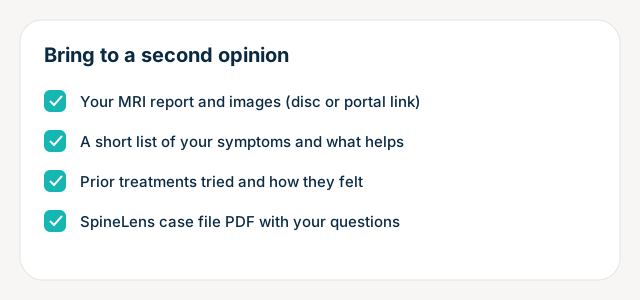
What to bring
Bring MRI and other imaging reports plus the images themselves when possible, a medication list, prior therapy or injection notes, and a one page symptom timeline. Download your SpineLens educational case file PDF after an analysis so your questions travel with you. It is educational only and not a second opinion by itself.
How to compare advice
Write down each clinician's stated problem, proposed procedure or non surgical path, risks, recovery, and what success means for your life goals. Prefer clear reasoning over pressure. If advice conflicts, ask both clinicians how they interpret the same imaging and exam.
Keep perspective
A second opinion may confirm the first plan, suggest waiting, propose a different procedure, or emphasize continued conservative care. Your values, risk tolerance, and support at home matter. Choose the path you understand with clinicians you trust.